


BDSM Collars


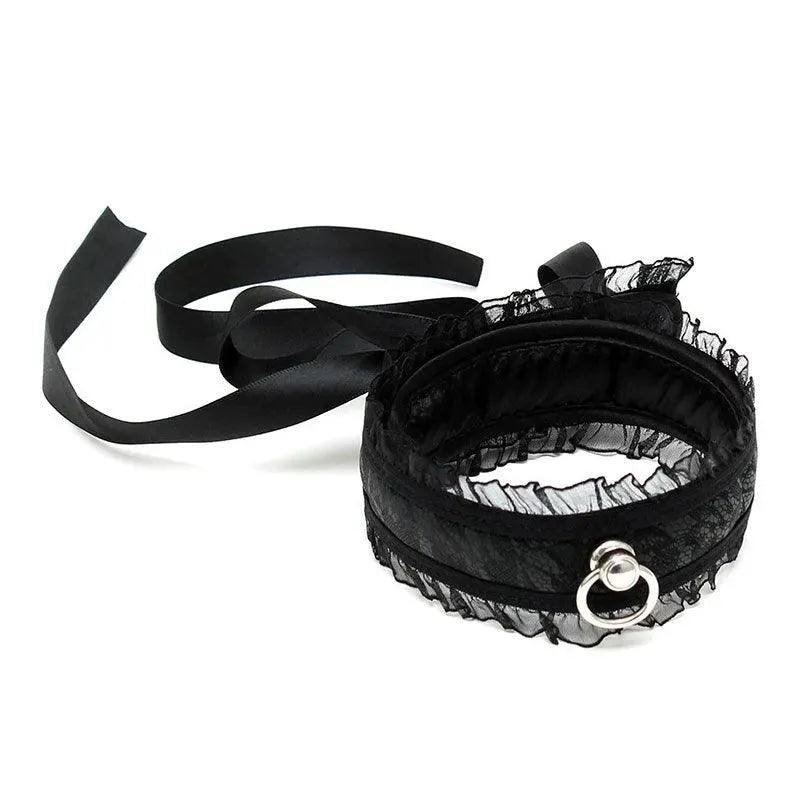



Finding the right BDSM collar
Width and construction
Width is the first practical decision. A slim collar — around an inch wide — suits aesthetic wear, club use, and lighter bondage. A wider collar spreads pressure across more of the neck, making it noticeably more comfortable over longer periods. Padded collars add a soft leather lining against the skin, which matters most when the collar is worn for extended stretches.
Hard leather holds its shape firmly and keeps a structured look. Softer leather breaks in and conforms with wear.
O-rings vs D-rings — and why it matters
Most collars have either an O-ring, a D-ring, or both — and the difference affects what you can attach to them.
An O-ring is a circular loop, typically used for leash attachment. It works well for leading and light attachment but isn't built for anything that pulls with sustained or heavy tension.
A D-ring is flat on one side and curved on the other, which makes it significantly stronger under load. If the collar is going to have rope or restraints attached — not just a leash — a D-ring handles the tension more reliably. Multiple D-rings allow attachment at several points simultaneously: a leash at the front, rope ties at the sides, all at the same time.
Posture collars
A posture collar is taller and more structured than a standard collar — typically several inches high — and limits how far the neck can move downward. The wearer cannot easily look down while it's on. This is an active restraint, not just a symbol. It changes posture, awareness, and how the wearer moves and interacts. Combined with other restraints, it adds a layer of physical control that a standard collar doesn't.
Locking collars
Some collars fasten with a lockable roller buckle — the keyholder locks it shut, the wearer can't get it off without the key. Others use a hex key or a numbered single-use lock. Wearing it becomes an act of submission that continues until the keyholder decides otherwise. Chastity cages operate on the same logic — the two together cover a lot of ground for anyone exploring ongoing power exchange.
Collar and nipple clamp systems
Some collars have chains running from the collar band down to nipple clamps. The connected format means any movement of the neck — looking up, turning the head — is relayed directly to the clamps. This is a fundamentally different dynamic from wearing nipple clamps separately. The collar becomes the source of the sensation, not just an accessory to it.
Day collars
Day collars are designed to be worn outside BDSM contexts without reading as bondage gear. Pearl designs, rose gold metal collars, and choker-style designs with hex key locks look indistinguishable from fashion jewellery. The locking mechanism is the significant detail — a hex key keeps the submission element intact while the aesthetic stays completely discreet.
For couples in ongoing power exchange dynamics, a day collar worn publicly is one of the more visible expressions of that dynamic. Collar and body link restraints extend this further by connecting the collar to other restraint points on the body.
When a collar changes the dynamic
A collar sits at the neck, visible and impossible to ignore. Putting one on marks a shift in the dynamic in a way a wrist cuff or rope tie doesn't quite do. For many people in D/s relationships, the collar is the central piece of gear.
Adding a bondage hood or mask removes sight and sound, leaving the wearer focused entirely on the collar and leash. A blindfold achieves a lighter version — the collar is felt but not seen.
BDSM collars vs other restraints
A posture collar actively restricts — the neck can't move freely while it's on. A standard collar is more symbolic than physical. Handcuffs and ankle cuffs are purely functional tools. A collar communicates the dynamic between two people as much as it physically does anything — which is why, for many people in D/s relationships, it's the first piece of gear they buy and the last they'd give up.
Genuine leather, plain packaging
Every collar here is purpose-built for BDSM and fashion use — leather, faux leather, silicone, and metal options all tested for skin safety and wear comfort. Leather collars should be wiped clean and conditioned occasionally to keep the material from drying out. Metal hardware should be dried thoroughly after cleaning. If you're building a full setup, bondage kits cover multiple pieces together at better value than buying individually. All orders leave in plain, unmarked packaging. Same-day dispatch on orders placed before 14:00 (Mon–Fri), free delivery over £50.
FAQs
Still deciding?
Browse everything from the homepage, or find answers fast in the Help Centre.

Trusted Products, Delivered Discreetly
Same-day dispatch before 14:00 (Mon–Fri). Plain boxes. Full tracking.
- Same-Day Dispatch
- Plain Packaging
- Tracked UK couriers
Click Here For More Information
Same day dispatch. Order before 14:00 (Monday to Friday) to ship the same day. You’ll get email updates at each step.
Delivery options. Choose what suits you best, including guaranteed weekend delivery.
Fully trackable. We send your tracking number as soon as your order leaves us.
Not going to be in? Divert your delivery to a nearby collection point.
Plain packaging only. No logos or product names on the box or label.
International shipping (EU). Enter your address at checkout for live options.
Full Delivery Info · Returns & Refunds · Discreet Experience
Same day dispatch. Order before 14:00 (Monday to Friday) to ship the same day. You’ll get email updates at each step.
Delivery options. Choose what suits you best, including guaranteed weekend delivery.
Fully trackable. We send your tracking number as soon as your order leaves us.
Not going to be in? Divert your delivery to a nearby collection point.
Plain packaging only. No logos or product names on the box or label.
International shipping (EU). Enter your address at checkout for live options.
Full Delivery Info · Returns & Refunds · Discreet Experience